Jump Ropes for Cardio Workouts

Disclosure / Affiliate Notice:
As an Amazon Associate I earn from qualifying purchases. Some links in this article may be affiliate links that earn me a commission at no extra cost to you.
There’s something almost deceptively simple about picking up a jump rope. You hold two handles, swing a cord over your head, and hop. Yet this elementary movement delivers one of the most efficient cardiovascular workouts available. I’ve watched countless people dismiss jump ropes as child’s play, only to find themselves gasping for air after sixty seconds of continuous skipping.
The reality is that jump ropes represent everything modern fitness culture often gets wrong. We obsess over complicated machines, expensive gym memberships, and elaborate workout routines when one of the most effective tools costs less than a decent meal and fits in a backpack. This disconnect reveals our tendency to equate complexity with effectiveness—a mistake that keeps many people from discovering genuinely transformative exercise habits.
The Physiological Reality Behind the Simplicity
What makes jump rope training so effective isn’t magic—it’s comprehensive muscle engagement combined with sustained cardiovascular demand. Every single jump requires coordinated effort from your calves, quadriceps, shoulders, and core muscles. Your heart rate climbs rapidly because your body is working multiple muscle groups simultaneously while maintaining balance and timing.
This differs fundamentally from isolated exercises that target single muscle groups. When you’re jumping rope, your nervous system fires constantly to maintain coordination between your hands, feet, and visual tracking of the rope’s position. This neurological demand burns additional calories and improves overall athletic coordination in ways that traditional cardio machines simply cannot match.
In my experience, people underestimate the metabolic intensity until they try maintaining a steady rhythm for just five minutes straight. The combination of muscular endurance and cardiovascular stress creates what exercise physiologists call “compound training effect”—you’re building strength, endurance, and coordination simultaneously.
Equipment Selection: Where Most People Go Wrong
The rope selection process reveals another common fitness misconception: that more expensive automatically means more effective. I’ve seen people spend hundreds on high-tech fitness gadgets while overlooking the fundamental characteristics that actually matter for jump rope training.
Rope weight distribution affects your workout significantly. Lighter ropes allow for faster rotations, which increases cardiovascular intensity and improves hand-eye coordination. Heavier ropes provide more resistance, shifting emphasis toward muscular endurance in your shoulders and arms. Neither approach is inherently superior—they serve different training goals.
Length adjustment is where most beginners sabotage their progress. A rope that’s too long creates wide, inefficient arcs that waste energy and disrupt rhythm. Too short, and you’ll constantly catch your feet, leading to frustration and potential injury. The armpit-height rule works well for most people, but individual proportions matter more than rigid measurements.
The Material Question
Rope material affects durability and performance in ways that aren’t immediately obvious. Basic cotton ropes feel comfortable but stretch over time, making consistent timing difficult. Synthetic materials maintain their length and provide more predictable performance, though they can be less forgiving on concrete surfaces.
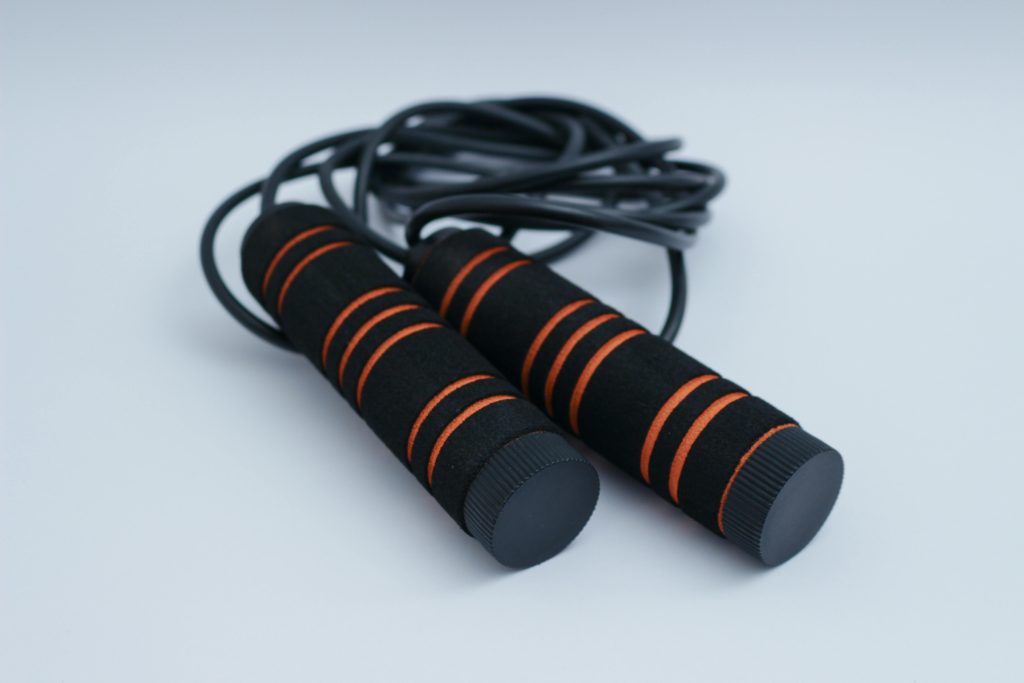
What most people overlook is how handle design impacts grip fatigue. Comfortable handles allow for longer training sessions, while poor ergonomics force early termination due to hand discomfort rather than cardiovascular limits.
Form and Technique: The Make-or-Break Factor
Proper jumping technique separates effective training from wasted effort and potential injury. The most common mistake I observe is treating jump rope like a full-body flailing exercise. Efficient jumping keeps arm movement minimal—your wrists control the rope rotation while your elbows stay relatively stationary near your torso.
Landing mechanics determine both injury risk and training effectiveness. Hard heel strikes create unnecessary joint stress and slow your rhythm. Landing on the balls of your feet with slight knee flexion absorbs impact naturally while maintaining the quick rebound necessary for continuous jumping.
The timing element cannot be overstated. Jumping too high wastes energy and slows your rhythm. The goal is minimal clearance—just enough height for the rope to pass underneath. This efficiency allows for sustained effort and higher overall intensity.
Programming and Integration Strategies
Jump rope training works best when integrated thoughtfully into existing routines rather than treated as a standalone solution. As a warm-up tool, five minutes of light skipping elevates heart rate gradually while activating the neuromuscular patterns needed for more complex movements.

For cardiovascular training, interval protocols prove most effective. Alternating between high-intensity bursts and recovery periods allows for greater total work output than steady-state jumping. This approach also prevents the coordination breakdown that occurs when fatigue accumulates.
The portability advantage cannot be ignored in our increasingly mobile society. Unlike gym-dependent equipment, a jump rope travels anywhere and requires minimal space. This accessibility removes common exercise barriers and supports consistency—the most important factor in any fitness program.
Who This Approach Serves Best
Jump rope training particularly benefits people with limited time, space, or equipment access. Busy professionals who travel frequently, parents with unpredictable schedules, and students in small living spaces can maintain cardiovascular fitness without gym memberships or elaborate setups.
Athletes in sports requiring footwork agility—boxing, tennis, basketball—gain sport-specific benefits from regular rope work. The timing, rhythm, and foot placement skills transfer directly to competitive performance.
Who Should Look Elsewhere
People with significant joint problems, particularly in knees or ankles, may find the repetitive impact problematic despite proper landing technique. Those seeking primarily strength gains would benefit more from resistance training, though jump rope can complement such programs effectively.
Individuals who struggle with coordination or rhythm might find the learning curve frustrating initially, though this often resolves with patient practice.
The Broader Fitness Philosophy
Jump rope training embodies a philosophy that prioritizes effectiveness over complexity, accessibility over exclusivity. In a fitness culture obsessed with the latest trends and expensive solutions, the humble jump rope represents a return to fundamental movement patterns that have proven their worth across generations.
The psychological benefits deserve mention as well. Successfully maintaining rhythm and building endurance through jump rope training creates a sense of mastery and accomplishment that transfers to other life areas. There’s something uniquely satisfying about improving at a skill that appears simple but demands genuine practice and dedication.
This approach challenges the modern assumption that effective exercise requires significant financial investment or complex programming. Sometimes the most powerful tools are the ones that have been hiding in plain sight, waiting for us to recognize their potential beyond childhood memories.
For those ready to experience the benefits of this efficient training method, a well-constructed rope with comfortable handles and adjustable length provides the foundation for consistent practice. A practical example can be found here:
As an Amazon Associate I earn from qualifying purchases.