Pentagon Chief Announces Escalation of Military Operations Against Iran
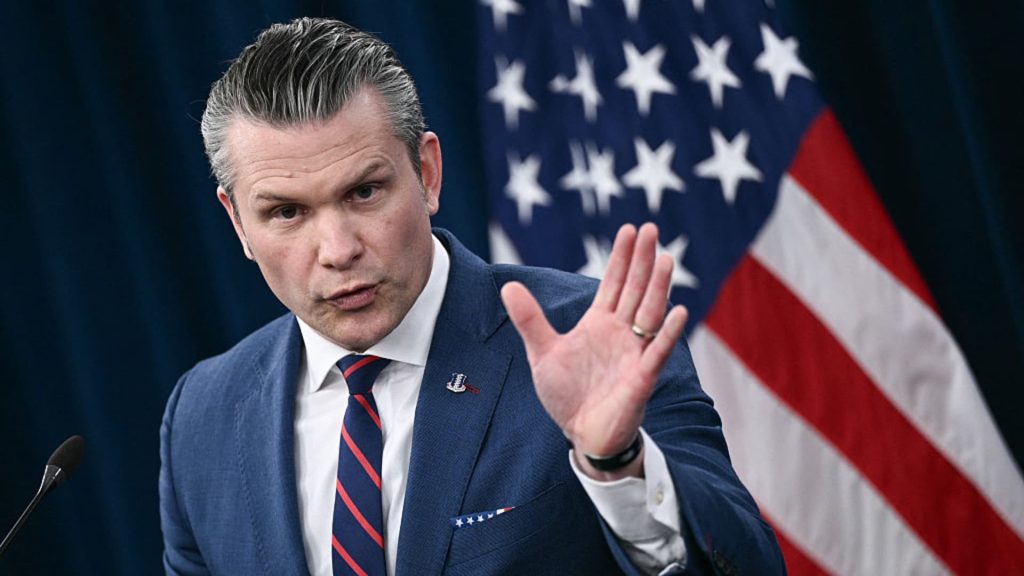
The Pentagon announced on Tuesday that military operations against Iran would reach their highest intensity yet, as Defense Secretary Pete Hegseth declared the day would mark the most aggressive phase of strikes in the ongoing conflict.
Speaking alongside General Dan Caine, Chairman of the Joint Chiefs of Staff, Hegseth characterized Iran as increasingly isolated and suffering significant losses during the tenth day of what officials have termed Operation Epic Fury.
According to the Defense Secretary, Iranian missile capabilities have been substantially degraded, with the country launching fewer projectiles in recent hours than at any point since hostilities began. He criticized Iran for targeting Gulf region allies without justification, noting the deterioration of previously cooperative relationships.
The Pentagon outlined three primary military goals for the intensified campaign: eliminating Iran’s missile production facilities and existing stockpiles, dismantling the Iranian naval forces, and ensuring permanent prevention of nuclear weapons development.
Hegseth emphasized the overwhelming nature of the military response, stating that American forces would deploy maximum air power including fighter aircraft and bombers. He expressed confidence in the technical superiority and force projection capabilities being demonstrated against Iranian targets.
The Defense Secretary clarified that unlike previous Middle Eastern interventions, the current administration would avoid extended nation-building commitments similar to those undertaken in Iraq and Afghanistan under previous presidencies.
President Trump had previously indicated optimism about a swift conclusion to the conflict, citing faster-than-anticipated destruction of Iranian military infrastructure since joint US-Israeli operations commenced on February 28th.
The President issued stern warnings regarding potential Iranian interference with global oil supplies, threatening severe retaliation if Iran disrupted shipping through the Strait of Hormuz. Trump’s social media communications indicated any such action would trigger responses significantly more devastating than current operations.
While Hegseth had initially estimated the conflict duration at three to eight weeks, he deferred to presidential authority regarding operational tempo and strategic objectives. The Defense Secretary acknowledged that timing decisions rest entirely with the Commander-in-Chief.
Concurrent with the Pentagon briefing, officials in Abu Dhabi confirmed an Iranian drone attack had sparked fires at the Ruwais Industrial Complex oil refinery, though no casualties were immediately reported from the incident.
Trump expressed dissatisfaction with Iran’s selection of Mojtaba Khamenei as the new supreme leader, replacing his father who was killed early in the conflict. The President questioned the younger Khamenei’s capacity for peaceful governance while indicating potential willingness to engage in diplomatic dialogue with Iranian leadership.
Pentagon officials advised the new Iranian leader to heed American warnings against pursuing nuclear weapons development, emphasizing the consequences of continued resistance to US objectives in the region.